' points='149.931 95.546 300.09 95.546 300.09 53.076 149.931 53.076'%3E%3C/polygon%3E%3Cpolygon id='Fill-7' fill='%23ef7d00' mask='url(%23mask-2)' points='203.559 148.622 246.465 148.622 246.465 0 203.559 0'%3E%3C/polygon%3E%3Cpolygon id='Fill-8' fill='%23d46317' mask='url(%23mask-2)' points='203.557 95.546 246.466 95.546 246.466 53.076 203.557 53.076'%3E%3C/polygon%3E%3Cpolygon id='Fill-9' fill='%237f5ca3' mask='url(%23mask-2)' points='419.6854 141.8702 313.5064 36.7782 343.8494 6.7502 450.0244 111.8412'%3E%3C/polygon%3E%3Cpolygon id='Fill-10' fill='%23e73331' mask='url(%23mask-2)' points='450.0258 36.7796 343.8468 141.8716 313.5078 111.8396 419.6868 6.7506'%3E%3C/polygon%3E%3Cpolygon id='Fill-11' fill='%238a2e35' mask='url(%23mask-2)' points='412.1074 74.3099 381.7654 104.3419 351.4254 74.3099 381.7684 44.2809'%3E%3C/polygon%3E%3Cpolygon id='Fill-12' fill='%232faadc' mask='url(%23mask-2)' points='0 36.782 106.176 141.874 136.518 111.842 30.339 6.753'%3E%3C/polygon%3E%3Cpolygon id='Fill-13' fill='%2395c11f' mask='url(%23mask-2)' points='0 111.8426 30.339 141.8746 136.518 36.7826 106.176 6.7536'%3E%3C/polygon%3E%3Cpolygon id='Fill-14' fill='%23009636' mask='url(%23mask-2)' points='98.5997 74.3126 68.2577 104.3446 37.9177 74.3126 68.2607 44.2836'%3E%3C/polygon%3E%3Cpath d='M513.2454,127.7109 L513.2454,98.5999 L507.8214,98.5999 L507.8214,127.3619 C507.8214,132.6109 506.0544,133.8959 502.9304,133.8959 C501.4564,133.8959 499.9244,133.6029 498.8624,133.2539 L498.8624,137.9199 C500.1004,138.2129 501.5754,138.3879 503.2834,138.3879 C510.5354,138.3879 513.2454,134.2459 513.2454,127.7109 L513.2454,127.7109 Z M530.5744,100.7589 C530.5744,98.8339 528.9834,97.3739 527.0394,97.3739 C525.0914,97.3739 523.5004,98.8899 523.5004,100.7589 C523.5004,102.6829 525.0914,104.1989 527.0394,104.1989 C528.9834,104.1989 530.5744,102.6239 530.5744,100.7589 L530.5744,100.7589 Z M524.3854,137.9789 L529.6894,137.9789 L529.6894,108.9839 L524.3854,108.9839 L524.3854,137.9789 Z M547.4314,100.7589 C547.4314,98.8339 545.8404,97.3739 543.9554,97.3739 C542.0084,97.3739 540.4164,98.8899 540.4164,100.7589 C540.4164,102.6829 542.0084,104.1989 543.9554,104.1989 C545.8404,104.1989 547.4314,102.6239 547.4314,100.7589 L547.4314,100.7589 Z M546.5494,141.1889 L546.5494,108.9839 L541.3024,108.9839 L541.3024,141.6539 C541.3024,146.8469 540.2404,148.3629 536.5874,148.3629 C535.3494,148.3629 533.9944,148.0729 532.8724,147.6639 L532.4024,152.2709 C533.5814,152.6229 535.1724,152.7979 536.4684,152.7979 C544.1324,152.7979 546.5494,148.9459 546.5494,141.1889 L546.5494,141.1889 Z M559.4574,131.2699 C557.4534,131.2699 555.8014,132.9039 555.8014,134.8879 C555.8014,136.8719 557.4534,138.5029 559.4574,138.5029 C561.4584,138.5029 563.1094,136.8719 563.1094,134.8879 C563.1094,132.9039 561.4584,131.2699 559.4574,131.2699 L559.4574,131.2699 Z M630.5284,98.5999 L625.1644,98.5999 L618.2664,125.3189 C617.7364,127.4179 617.3234,129.4609 616.9114,131.7379 L616.8514,131.7379 C616.4414,129.3449 615.8494,126.8349 615.2594,124.7949 L607.6584,98.5999 L601.5264,98.5999 L594.1584,124.5609 C593.5124,126.8939 592.9794,129.3449 592.5664,131.8529 L592.5094,131.8529 C592.0974,129.2859 591.6244,126.8939 590.9184,124.2679 L584.1964,98.5999 L578.4204,98.5999 L588.9144,137.9789 L595.3964,137.9789 L602.8244,111.4349 C603.4734,109.1579 603.9434,106.9409 604.2394,104.6669 L604.2964,104.6669 C604.6524,106.8849 605.1214,109.2179 605.7714,111.4919 L613.3754,137.9789 L620.0344,137.9789 L630.5284,98.5999 Z M644.0164,100.7589 C644.0164,98.8339 642.4254,97.3739 640.4804,97.3739 C638.5364,97.3739 636.9444,98.8899 636.9444,100.7589 C636.9444,102.6829 638.5364,104.1989 640.4804,104.1989 C642.4254,104.1989 644.0164,102.6239 644.0164,100.7589 L644.0164,100.7589 Z M637.8304,137.9789 L643.1344,137.9789 L643.1344,108.9839 L637.8304,108.9839 L637.8304,137.9789 Z M660.8764,100.7589 C660.8764,98.8339 659.2824,97.3739 657.3974,97.3739 C655.4534,97.3739 653.8614,98.8899 653.8614,100.7589 C653.8614,102.6829 655.4534,104.1989 657.3974,104.1989 C659.2824,104.1989 660.8764,102.6239 660.8764,100.7589 L660.8764,100.7589 Z M659.9914,141.1889 L659.9914,108.9839 L654.7444,108.9839 L654.7444,141.6539 C654.7444,146.8469 653.6854,148.3629 650.0294,148.3629 C648.7914,148.3629 647.4354,148.0729 646.3174,147.6639 L645.8444,152.2709 C647.0234,152.6229 648.6144,152.7979 649.9124,152.7979 C657.5734,152.7979 659.9914,148.9459 659.9914,141.1889 L659.9914,141.1889 Z M672.8994,131.2699 C670.8944,131.2699 669.2434,132.9039 669.2434,134.8879 C669.2434,136.8719 670.8944,138.5029 672.8994,138.5029 C674.9034,138.5029 676.5544,136.8719 676.5544,134.8879 C676.5544,132.9039 674.9034,131.2699 672.8994,131.2699 L672.8994,131.2699 Z M722.9404,126.1949 C722.9404,122.1089 720.4634,118.0849 714.9234,117.1529 L714.9234,117.0339 C719.2274,115.6929 722.0544,112.0189 722.0544,107.8759 C722.0544,101.9839 717.8694,98.4249 709.1464,98.4249 C704.3724,98.4249 700.3064,98.5409 697.4174,98.5999 L697.4174,137.9789 C701.3084,138.0379 705.1974,138.1539 707.5554,138.1539 C719.9934,138.1539 722.9404,130.9209 722.9404,126.1949 L722.9404,126.1949 Z M716.4574,108.7499 C716.4574,113.0669 712.9784,115.6339 706.4364,115.6339 C705.0214,115.6339 703.9594,115.6339 702.8404,115.5779 L702.8404,102.8579 C704.4324,102.7989 706.3764,102.7419 708.2044,102.7419 C714.6294,102.7419 716.4574,105.2499 716.4574,108.7499 L716.4574,108.7499 Z M717.2804,126.3699 C717.2804,130.6869 714.3934,133.7779 707.9114,133.7779 C705.5504,133.7779 703.8424,133.6619 702.8404,133.4879 L702.8404,119.7199 C703.7824,119.6599 705.8474,119.6599 706.5534,119.6599 C712.6854,119.6599 717.2804,121.2949 717.2804,126.3699 L717.2804,126.3699 Z M732.1954,137.9799 L737.4994,137.9799 L737.4994,95.3909 L732.1954,95.3909 L732.1954,137.9799 Z M754.8854,100.7589 C754.8854,98.8339 753.2944,97.3739 751.3504,97.3739 C749.4054,97.3739 747.8144,98.8899 747.8144,100.7589 C747.8144,102.6829 749.4054,104.1989 751.3504,104.1989 C753.2944,104.1989 754.8854,102.6239 754.8854,100.7589 L754.8854,100.7589 Z M748.6994,137.9789 L754.0034,137.9789 L754.0034,108.9839 L748.6994,108.9839 L748.6994,137.9789 Z M771.7454,100.7589 C771.7454,98.8339 770.1544,97.3739 768.2664,97.3739 C766.3224,97.3739 764.7304,98.8899 764.7304,100.7589 C764.7304,102.6829 766.3224,104.1989 768.2664,104.1989 C770.1544,104.1989 771.7454,102.6239 771.7454,100.7589 L771.7454,100.7589 Z M770.8604,141.1889 L770.8604,108.9839 L765.6134,108.9839 L765.6134,141.6539 C765.6134,146.8469 764.5544,148.3629 760.8984,148.3629 C759.6604,148.3629 758.3054,148.0729 757.1864,147.6639 L756.7134,152.2709 C757.8924,152.6229 759.4834,152.7979 760.7824,152.7979 C768.4434,152.7979 770.8604,148.9459 770.8604,141.1889 L770.8604,141.1889 Z M783.7684,131.2699 C781.7644,131.2699 780.1124,132.9039 780.1124,134.8879 C780.1124,136.8719 781.7644,138.5029 783.7684,138.5029 C785.7724,138.5029 787.4234,136.8719 787.4234,134.8879 C787.4234,132.9039 785.7724,131.2699 783.7684,131.2699 L783.7684,131.2699 Z' id='Fill-15' fill='%2395c11f' mask='url(%23mask-2)'%3E%3C/path%3E%3C/g%3E%3C/g%3E%3C/svg%3E)

Power of West 2026: smart collaboration
Peter Lange’s Photos
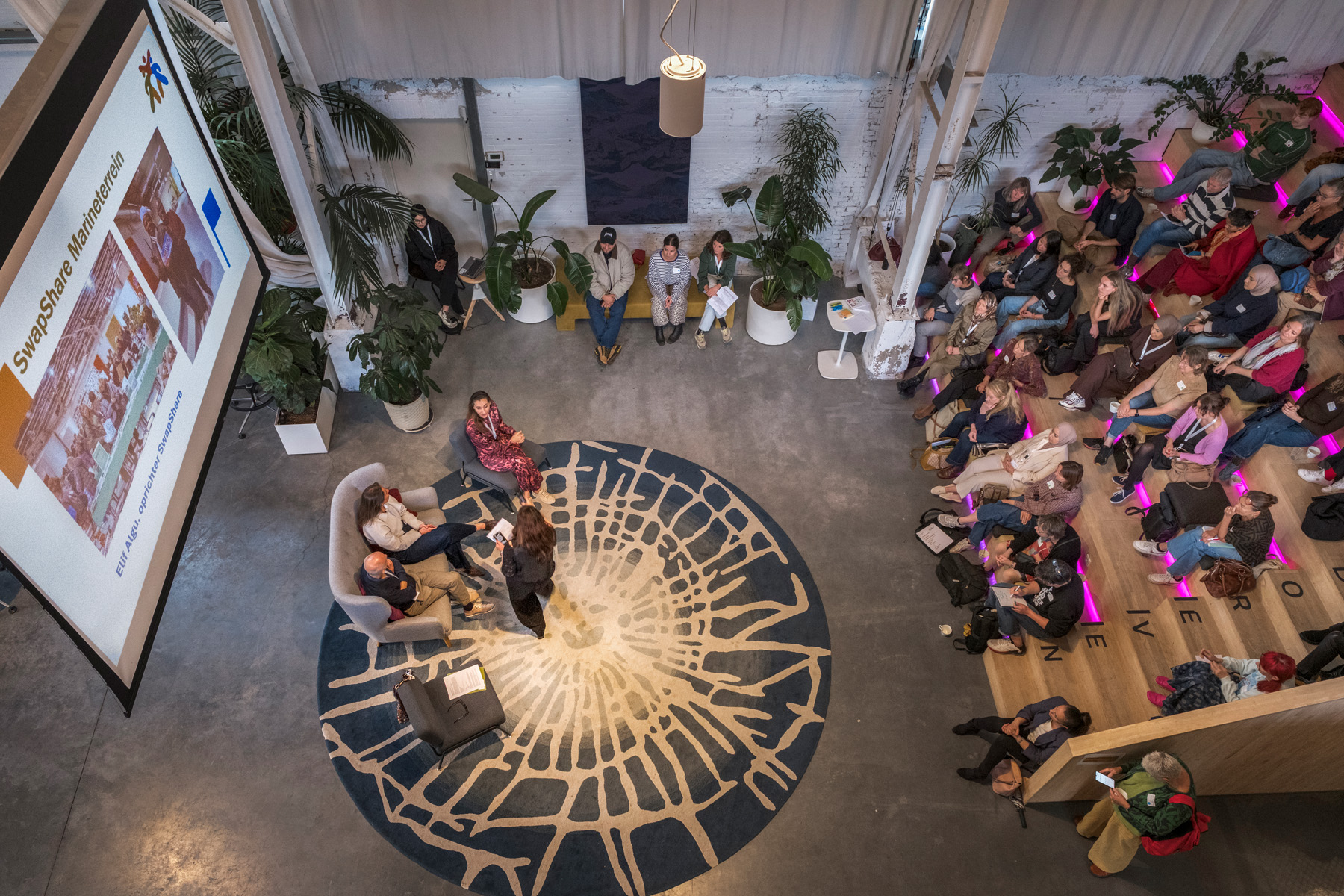
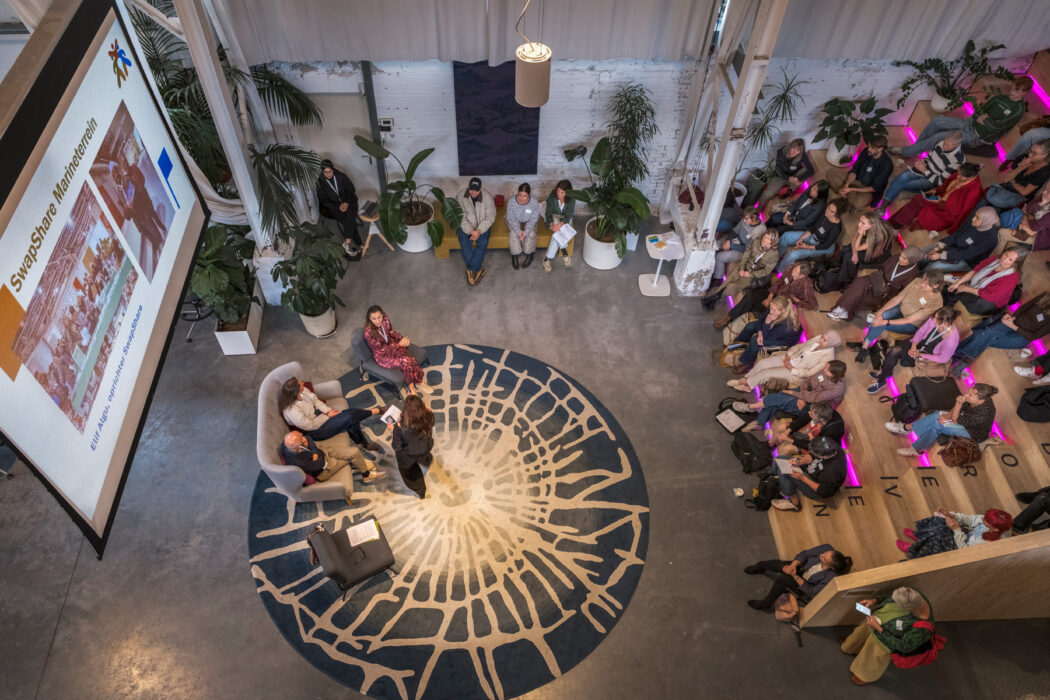
The second edition of the Power of West on October 8, 2026, focused on smart collaboration between different domains: care and assistance with social basics and informal care, businesses with social basics, municipalities, and social basics. The conversation also revolved around inclusion: how do you ensure that everyone in Amsterdam is seen, heard, and can participate?
DB55 in the Houthaven was a beautiful location to come together for this, and the stands were filled with neighborhood workers, initiators, board members of foundations, members of neighborhood initiatives, coordinators and volunteers of local activities, meeting places and day activities, buddy projects, neighborhood team members, youth workers, staff from the OKT, and civil servants.
The host was Naeeda Aurangzeb.
Massih Hutak
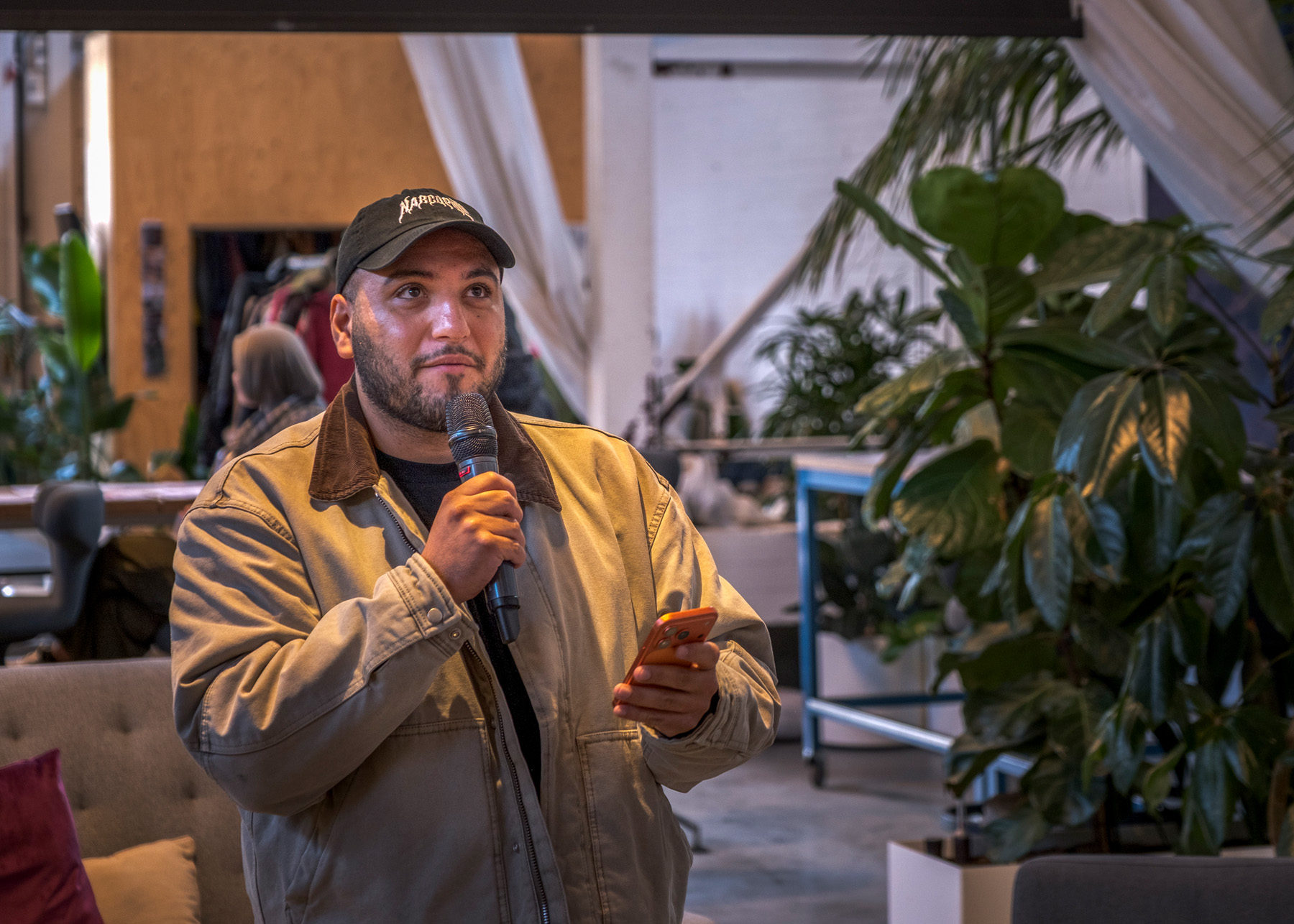
Massih Hutak is a rapper, writer, and part of the residents’ organization Verdedig Noord. He shared how this organization is building a solidarity city through social projects and through art and cultural education. An inspiring example from another neighborhood.
Success stories
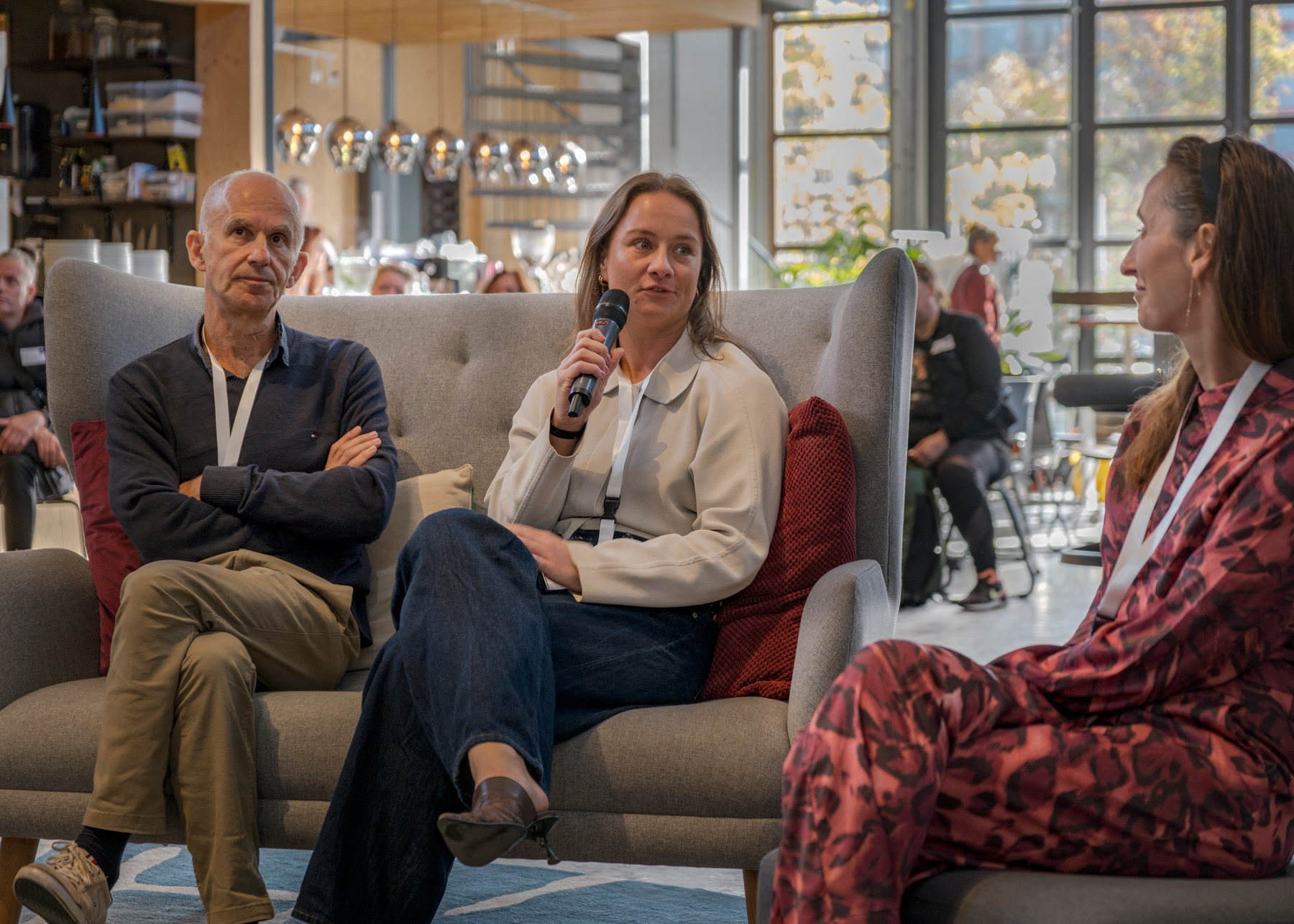
By collaborating closely and making good use of existing resources, you can contribute to solving a social issue. During the panel discussion, three examples were presented:
- Elif Algu from SwapShare
- Wasilis Psathas from The Neighborhood Bus
- Jikkina Hijmans from Use/Space
SwapShare organizes exchange events throughout the country.
Elif: “SwapShare makes it possible, together with our partners, to exchange items you no longer use for items that you actually need. This way, we reduce waste and garbage, save people money, and create new encounters. Because exchanging brings not only items but also people together.”
Read the success story of Elif
The Neighborhood Bus transports elderly people in Osdorp who are not mobile to activities in the area.
Wasilis: “To reduce loneliness among less mobile elderly people in the neighborhood, the idea of the Neighborhood Bus was born. With vans from Cordaan that are not used during the day, we have set up a real line along various activities in Osdorp. The bus is more than just transportation from A to B. That’s why I sometimes call it the activity bus: it makes it possible to, for example, have coffee somewhere, then have lunch, and then go to an activity.”
Read the success story of Wasilis
Use/space connects companies that have available space with social organizations.
Jikkina: “Many social and cultural initiatives struggle to find affordable space for their activities, while office buildings often have areas that remain unused for a large part of the time. Use/space brings these worlds together by connecting social organizations with companies that want to open their spaces. This creates room for social initiatives, new encounters, and more connection between the building and its surroundings.”
Read the success story of Jikkina
7 Success factors according to these three:
- Find the common interest: A collaboration works when it benefits each partner.
- Ensure mutual trust: be open and transparent.
- Share ownership: give others the space to contribute and to give it their own interpretation.
- Look at what is already there and connect that in a creative way, think outside the box.
- Listening and adjusting: the idea and the plan are not sacred, keep the social goal in mind.
- Make sure someone has the overview. and connects the partners.
- Start small!
Pub quiz
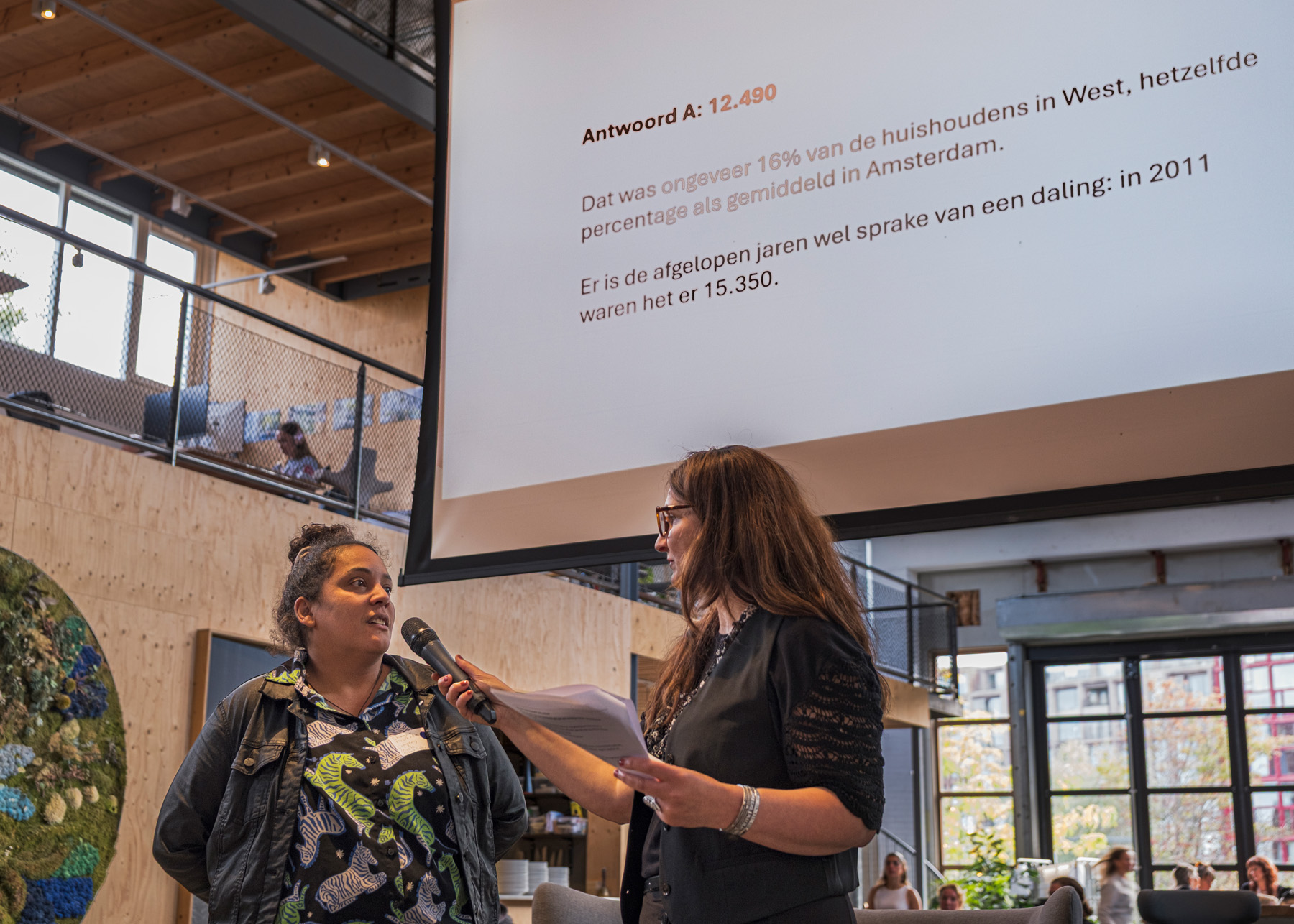
The winner of the pub quiz Sociale basis West was Shayne McCreadie from the Cultuurshifters! She answered all 13 questions correctly 😊
Just to recap:
- A playground is indeed part of the social foundation.
- There are 8 community rooms in West: Van Lennep, Bellamy, Corantijn, Da Costa & Co, De Nieuwe Reiger, Jeltje, Meneer Howard & Co, and de Gulden Winckel.
- Volta is a youth stage managed by Dock.
- There are around 100 foundations and community initiatives active in West from the social base.
- The aim of the social foundation is to promote self-reliance and social cohesion.
- Social cohesion has remained stable in the West over the past few years.
- The task of the Core Alliance Social Base West is to collaborate with each other and with all other parties in the social base to better address social challenges.
- A neighborhood meal that runs late because everyone is still happily chatting can be an example of a clash between two cultural forms: polychronic and monochronic.
- 32% of secondary school students in Amsterdam West experienced mental health issues in 2023.
- 490 households lived in 2023 at or below the social minimum (16%)
- Misunderstood behavior is behavior where the situation becomes unsafe, unpredictable, or incomprehensible for the person or others.
- It is expected that there will be 23,773 people aged 65 and older in the West (currently, that number is 16,880).
- More than 40,000 people are volunteering in West!
Working groups
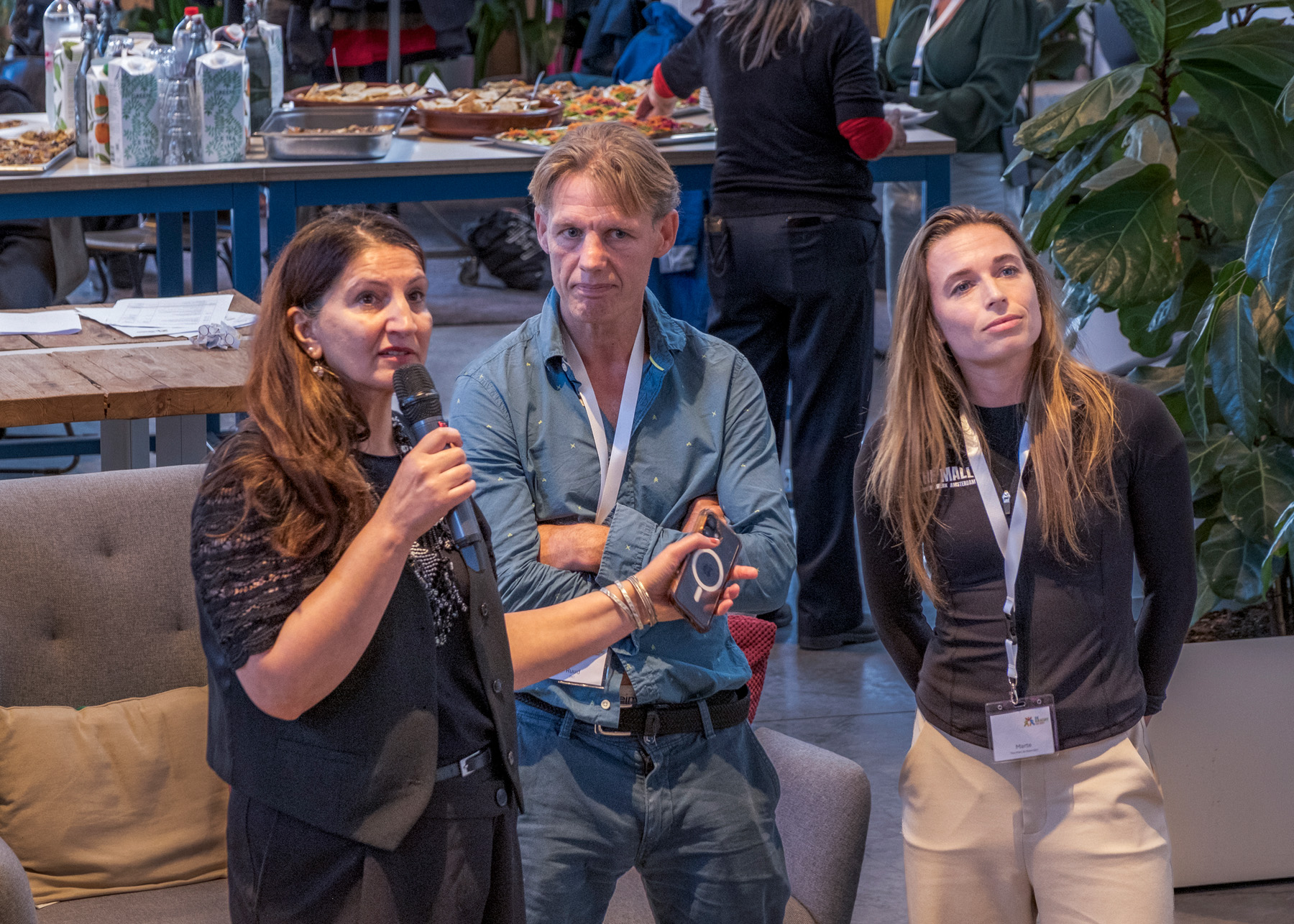
- Working Group Youth
In the working group Youth, the participants reflected on the question: How can we ensure that more young people on the waiting list for youth care are registered for the Step up groups within youth work?
Golden tips:
- Share the project (more) on social media. See if young people who participated in the group might want to share something (anonymously).
- Involve the school youth work more broadly in this offering.
- Make people responsible as direct contacts for the project at the youth care organizations and the schools.
- Let youth care workers accompany youth workers. Involve them in how youth workers conduct motivational conversations with young people and inspire them.
Read the report of the Youth Working Group
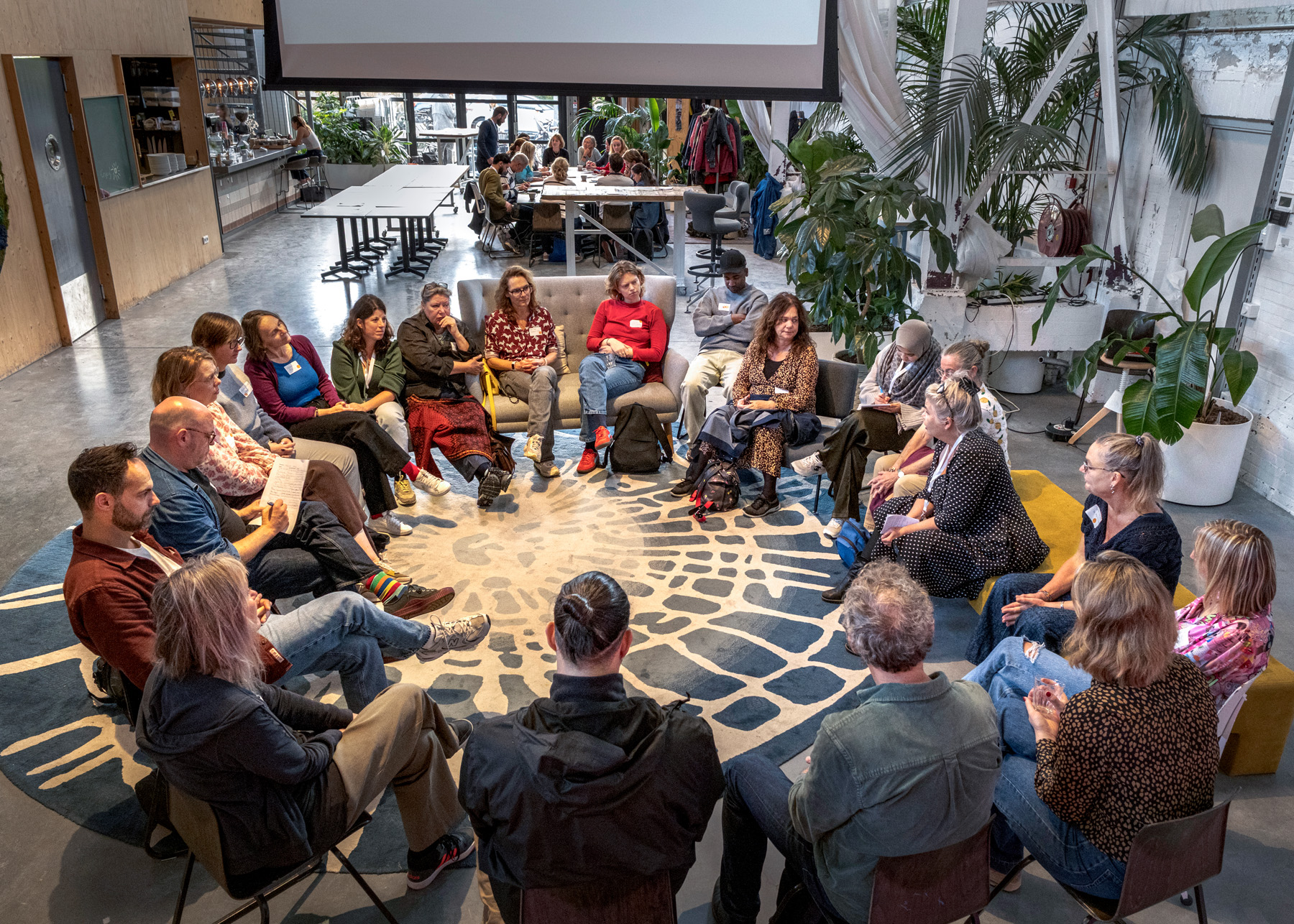
- Working group Misunderstood behavior
In this working group, the theme of misunderstood behavior was discussed: what is it exactly and when is there a problem? People with misunderstood behavior may need help, often already receive help, and some do not want help. The environment is increasingly affected by misunderstood behavior. There are more and more reports. Therefore, there is a greater focus on engagement care. This means that caregivers help people who do not easily ask for help or have difficulty accepting help, and are approached nonetheless. The caregiver tries to make contact and remains involved.
In engagement care, it is important to:
- to signal early;
- good to look at the situation;
- build trust;
- to work together with the person;
- to continue offering help, even when someone initially refuses it.
Read the report of the working group Unexplained behavior.
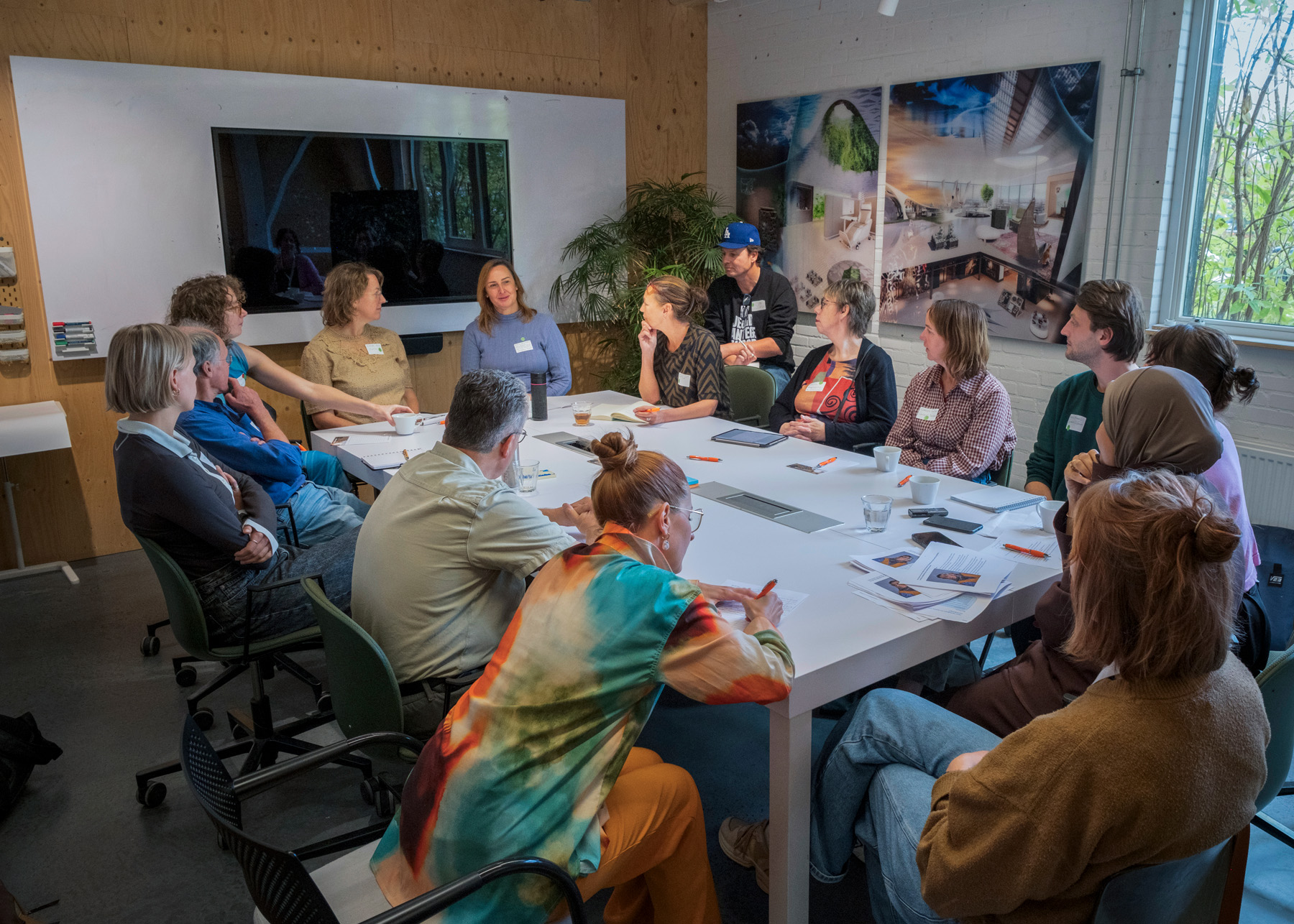
- Working Group Elderly
This working group is about vulnerable elderly people in Amsterdam West and how we can work together to ensure that they can live in their own homes as healthily, safely, and vitally as possible for as long as possible.
Using a case study of an elderly forgetful woman without a network who avoids care, we will examine what the present organizations can contribute.
Conclusion:
There is a lot of supply in the social basic services. But if there is no child or another trusted personal contact person involved, this assistance often stalls. The role of a familiar face is the most important in these cases to get everything else started. One contact person is needed who can coordinate all this supply, take the initiative for the first step, and also remain proactively involved. Wellbeing on Prescription can play a very important role in these cases in the first three months. A Neighborhood Team member could also be this person, along with a volunteer who fits the Amsterdam resident, if language and trust are a challenge.
Read the report of the Elderly Working Group.
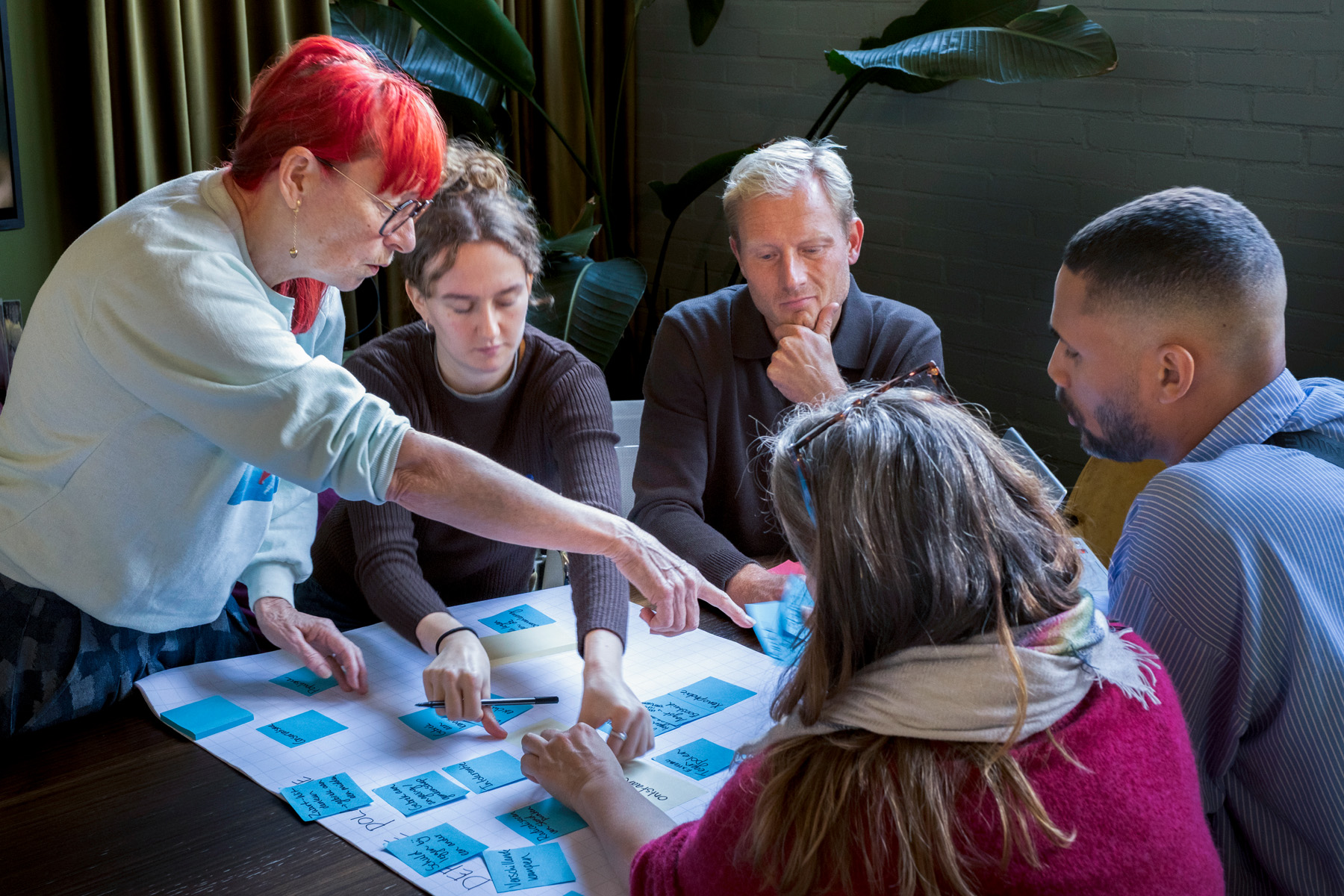
- Working Group Polarization
In this working group, the theory behind monochronic and polychronic time perception and culture was explained through a personal story. A valuable dialogue emerged in which the tensions and opportunities between the two cultural forms were extensively discussed.
Several participants reflected on how the two perspectives of monochronic and polychronic can be connected.
They advocate for a harmonious approach, aptly summarized as “Make it a dance”, and came to the following concrete conditions for synergy:
- Understanding and deepening: Show genuine interest by delving into each other and being open to learning from one another.
- Meet: Creating space to truly get to know each other.
- Clear expectations: Clear communication in advance about what can be expected from each other.
- Information without direct judgment: Involving people actively in agreements made, with a focus on explanation and guidance rather than immediate consequences or punitive measures.
- Self-reflection: Daring to ask the critical question: “What can we change ourselves?”
Read the report of the working group Polarization
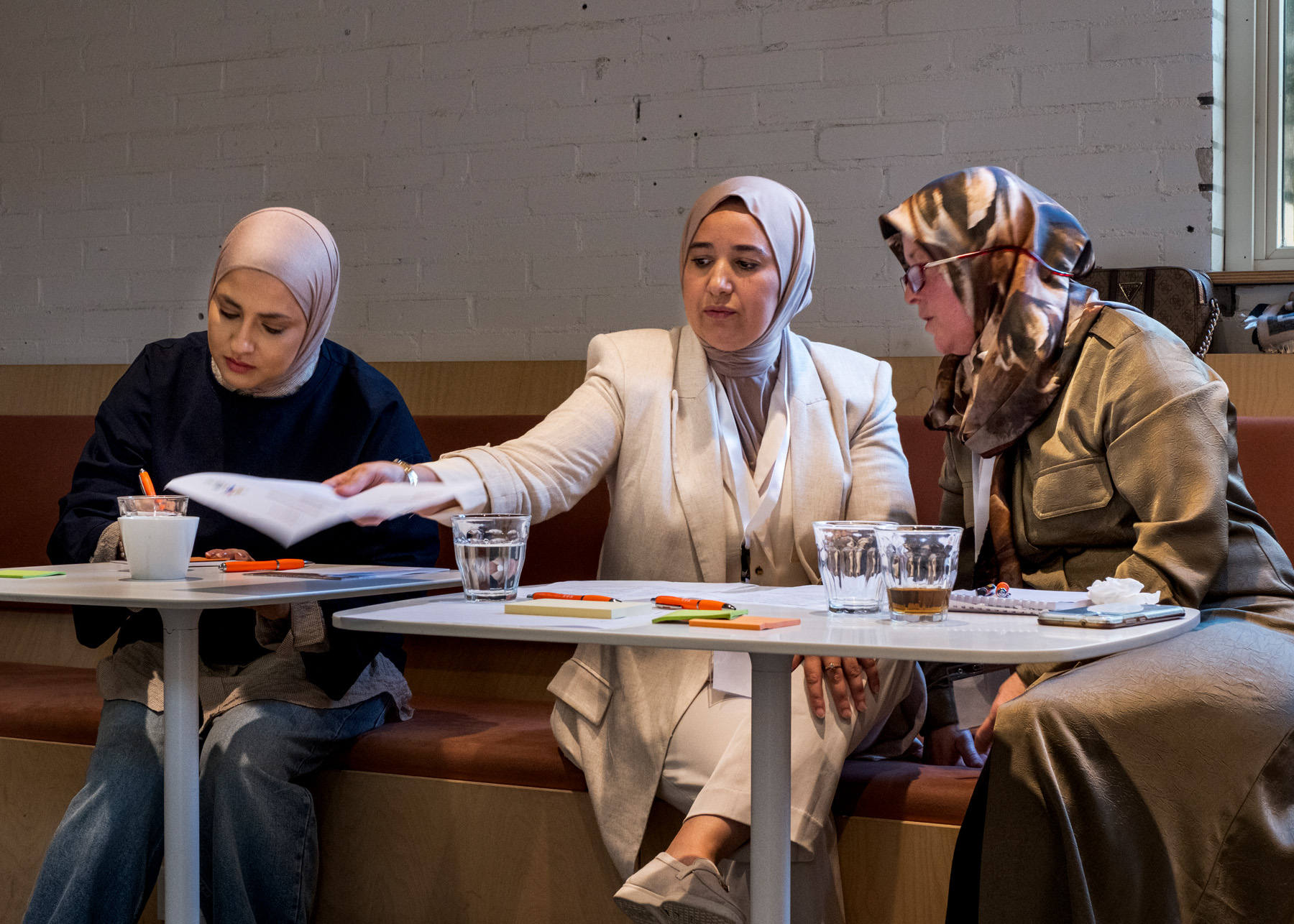
- Working Group Women
In this working group, there was discussion about how women can develop their talents and what barriers they encounter on their way to paid work. An important barrier is the combination of work, family, and childcare. Self-confidence, personal circumstances, and the accessibility of activities can also play a role. It is therefore important to look not only at language skills or background but also at talents, opportunities, and self-confidence.
The meeting made it clear that the step to work is not only dependent on the motivation of women. Practical circumstances, such as childcare and working hours, confidence in one’s own abilities, and alignment with employers also play an important role. By working together, focusing on talents, and removing practical barriers, organizations can better support women in their development and participation.
Tips
- Remove practical barriers
- Build trust and lower the threshold
- Put talents at the center
- Strengthen the collaboration with employers
- Create a social map
- Approach employers and organizations actively
- Include men and families
Read the report of the Women working group
Read the tips and recommendations from the Women working group.
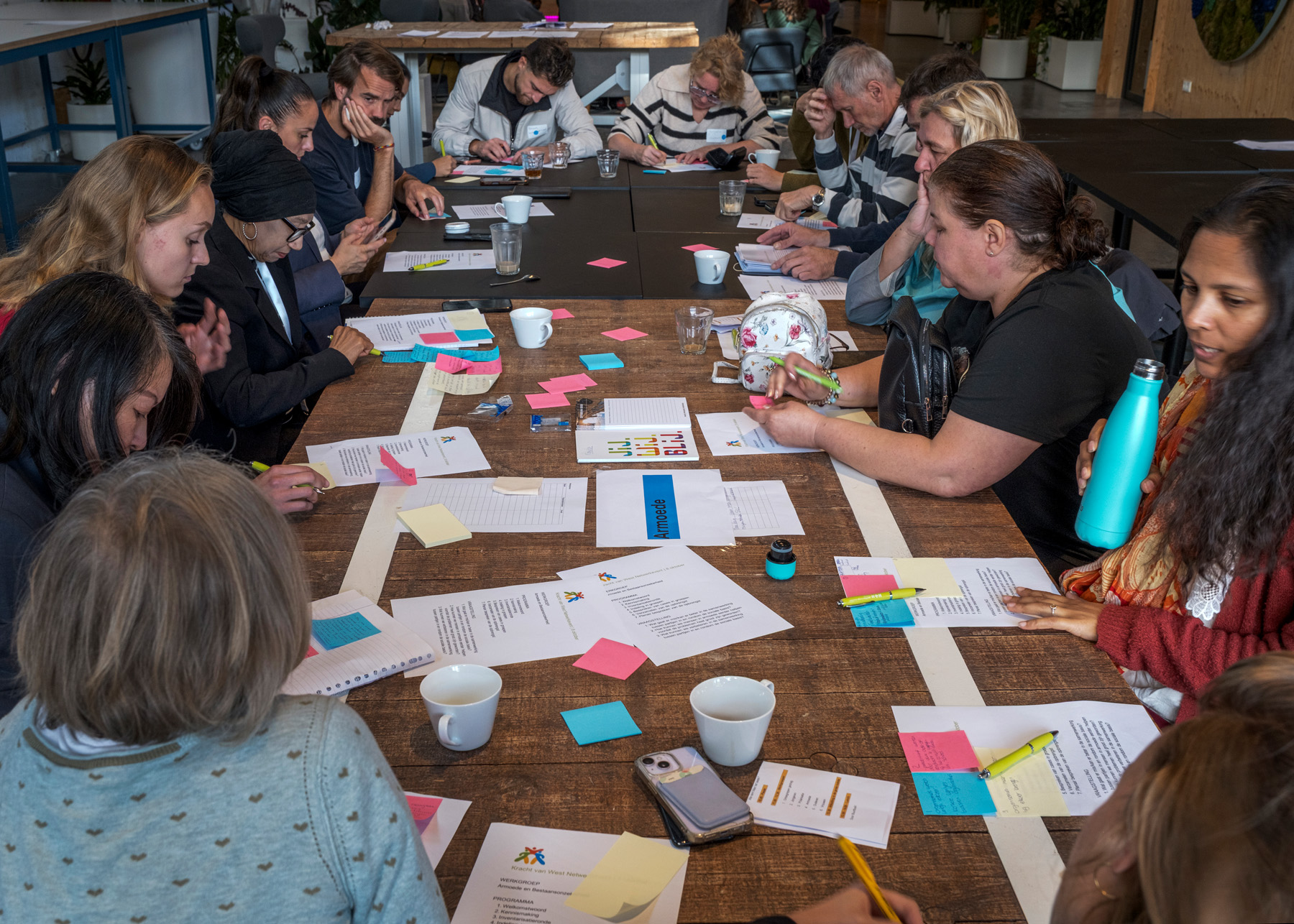
Unfortunately, no report has been made by the Poverty working group.
Lunch
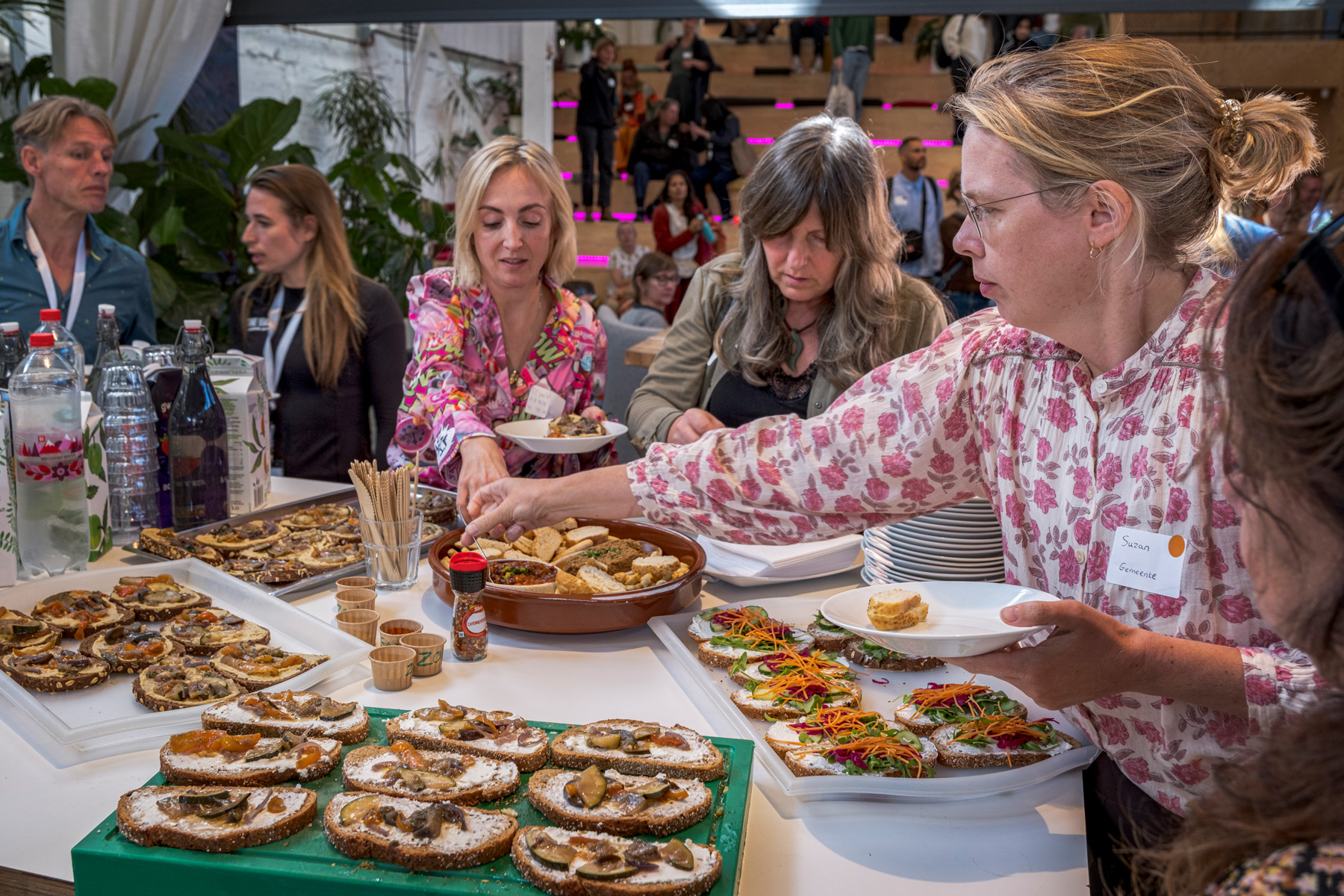
The lunch was made by volunteers from Buurtbuik: with food that would otherwise be thrown away, Milana and Mohamed managed to create a delicious lunch. A nice moment to chat afterwards.
The Power of the West
The Power of West is an annual networking event facilitated by the Kernalliantie Sociale Basis West and this year organized by a working group consisting of: Simone Timmer (Volunteers Central Amsterdam), Harmen van Mierlo (Rainbow Group), Milana van der Werf (ASV Bilderdijkpark/ Neighborhood Belly), Nadia Aktaou (together Strong), Dorine Verheul (Combiwel), Godfrey Lado (Ubuntu Embassy) and Ismail Ouachour (Dock).
The aim of the event is to meet each other, learn from each other, and work together on issues that are relevant in West.
Thanks to: Dini Glas (Regenboog Groep), Marlot van der Himst (Roads), Rikke Komen (St Mantelzorg en Dementie), Hajar Fikri (Buurtteam Amsterdam West), Hatice Kara (St Aminah), Wasilis Psathas (Combiwel), Mary Yau (Combiwel), Marte van der Wal (The Mall de Baarsjes), Ruud van den Berg (OKT), interns Dock, Jikkina Hijmans (Use/Space), Liselotte Korver (Use/space), Elif Algu (SwapShare), Peter Lange (Vrijwilligers Centrale Amsterdam), Judith Pot (Combiwel), Lisa Traub (Combiwel), Maya van de Ven (Combiwel), Phronaise Jacobs (Combiwel), Mohamed (Combiwel), Coraline Gerritsen (Combiwel) Naeeda Aurangzeb, Massih Hutak.
See you next year!